The Benefits of Hiring a Professional Carpenter

The Benefits of Hiring a Professional Carpenter

When it comes to caring for and maintaining your home, carpentry plays one of the most important roles. These projects deal with the overall structure, foundation, and architecture of your home—making it the thing that, literally, holds it all together. Because of this, carpentry tasks can be complex, tricky, and dangerous for homeowners to take on themselves. Fortunately, there are a series of benefits to hiring a professional carpenter for all your home’s woodworking needs.

Diverse Areas of Expertise and Experience

From furniture finishing to home framing, there are a wide variety of jobs in the carpentry field and a plethora of ways they can help you in the home. This makes it incredibly beneficial to hire professionals, as they can provide you with an extra level of skill and experience you wouldn’t otherwise have access to. Furthermore, their knowledge can give you insight into the project you’re having completed and supply you with additional ideas for the finished product.

Access to Insider Knowledge and Resources

In hiring a professional, you can also gain a better understanding of what to look out for in a quality carpentry project. For instance, carpenters need to know how to identify the signs of damage, such as wood rot and mold, in order to best fix the problem. By getting a professional to take on the project, you can also use them as a resource to learn more about the dangers of certain wood damage and how to keep these damages from happening again in the future. 

Timeliness at No Extra Cost

Our Carpenters in Cumming, Georgia are especially effective at finishing projects in a timely manner without costing you extra. While DIY project can take months for you to complete, these tasks can be finished as little as a week or two in the right hands. This is because professionals can better prevent delays and ensure that each step of the process has a designated timeline. Best of all, since they’re getting the job done faster, they can accomplish this without needing to charge you more for their time.

Quality and Lasting Results

When you get professionals to take on the job, you’re also guaranteed to get quality results that will last you for years to come. As tempting as it may be to take on the project yourself, there’s always the chance that you could miss something or make a mistake. But with experience on your side—which is a huge benefit of hiring a professional carpenter—you can be assured that the problem is taken care of and the finished product is strong. 

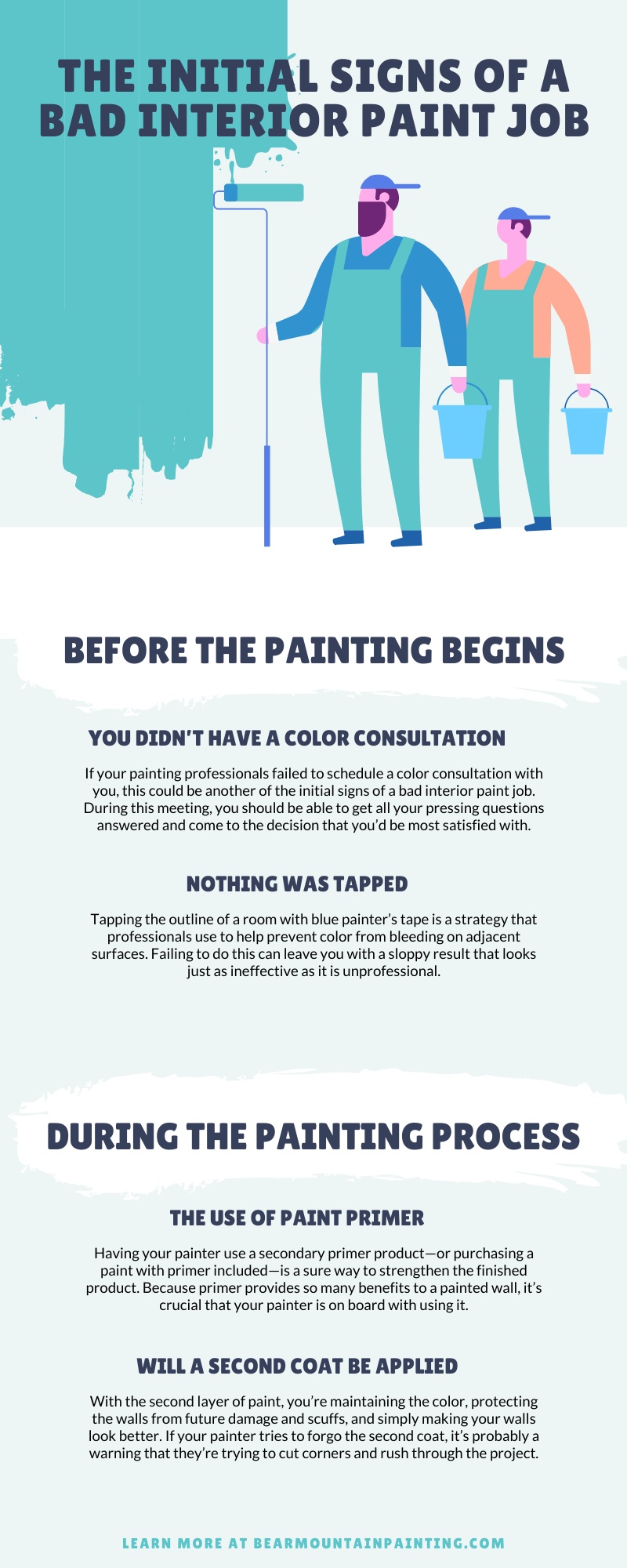
The Initial Signs of a Bad Interior Paint Job

Signs of a Bad Interior Paint Job (and How to Spot Them Early)

As a homeowner, you deserve to know what quality workmanship looks like. Whether it’s fixing a cabinet hinge or repainting a bedroom, the process and results should reflect the time and money you’ve invested. Interior painting is no exception. Even before the first coat dries, there are clear signs that distinguish a great paint job from a disappointing one.

Bear Mountain Custom Painting is the leading painting company in Cumming, and we’ve seen the difference between careful preparation and corner-cutting firsthand. Below are the most common indicators of a bad interior paint job, from the early preparation stages to the final finish, and what each problem usually means. Whether you need house painting in Johns Creek, Marietta, or elsewhere in North Georgia, we are here to help.

Early Warning Signs Before the Painting Begins

The Room Wasn’t Properly Prepared

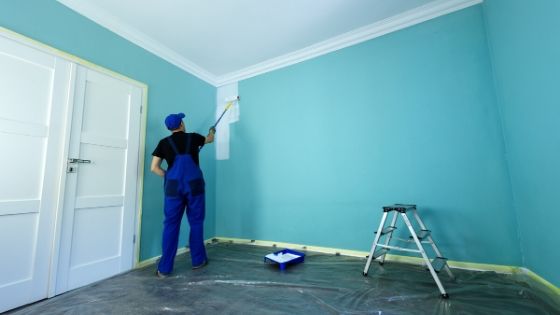
A professional painter should never start without protecting your home. Floors need to be covered with plastic or canvas drop cloths, furniture should be moved or wrapped, and fixtures should be taped off. If your painter skips these steps or tracks paint and dust through your home, that lack of care will likely carry into the finished product.

The Walls Weren’t Cleaned or Repaired

Walls accumulate grease, dust, and small imperfections that interfere with adhesion. If your painter begins applying color to a dirty or damaged surface, expect uneven texture and weak coverage. Proper preparation includes wiping walls clean, patching holes, sanding rough areas, and waiting for the surface to dry completely before painting.

You Didn’t Receive a Color Consultation

A good painter helps you choose colors that complement your lighting, décor, and lifestyle. Skipping this conversation often leads to disappointment when the finished color looks darker, lighter, or simply out of place. Professionals who care about results will offer guidance and show samples before opening a single can.

Taping and Masking Were Ignored

Painter’s tape is the difference between crisp, professional edges and sloppy lines. Skipping this step leaves uneven borders along trim, ceilings, or adjacent walls. If you notice tape missing or see paint creeping onto other surfaces, that’s a major red flag.

Visible Signs of a Poor Paint Job

Once the paint is on the wall, surface imperfections become easy to spot. These issues usually stem from poor technique, improper drying times, or inferior products.

Blistering and Bubbling

When paint lifts away from the wall in small bubbles or blisters, it means moisture or dirt was trapped beneath the surface. This problem often appears within days of completion, especially if the surface wasn’t cleaned or primed.

Cracking or “Alligatoring”

If the paint looks like cracked leather or reptile skin, the surface probably wasn’t properly primed or the painter applied a new coat before the first one dried. Cracking paint not only looks bad but can eventually peel away completely.

Peeling Paint

Peeling is one of the clearest signs of a poor paint job. Paint that detaches from the wall suggests that the surface wasn’t cleaned, sanded, or sealed properly. It can also result from low-quality paint or applying new paint over a glossy finish without sanding.

Wrinkling

Wrinkling happens when a thick layer of paint dries unevenly. It can look like small waves or folds in the surface and is more common with oil-based paints. Painters who rush the job or apply paint in humid conditions often cause this flaw.

Uneven Texture

Paint should dry smooth and even. If you can see or feel rough spots, the surface may not have been sanded correctly, or too little paint was used. Uneven texture can also occur when different types of paint are mixed across walls and ceilings.

Application and Finish Flaws

Uneven Color and Coverage

Color should appear consistent from corner to corner. Patchy or blotchy walls often mean the painter skipped primer or failed to apply a second coat. A quality job requires even layers, proper drying times, and attention to coverage in every stroke.

Streaks and Roller Marks

Visible streaks or roller marks mean the painter used low-quality tools, overworked the paint, or didn’t maintain a wet edge while rolling. These lines are especially noticeable when light hits the wall at an angle.

Drips, Runs, and Sagging

If you notice dried paint drips or sagging lines, your painter applied too much paint in one area. Skilled painters apply thin, even coats to avoid these runs and check their work before the paint dries.

Brush Marks and Poor Blending

A high-quality finish should look seamless. Heavy brush marks, visible strokes, or inconsistent textures between brushed and rolled areas show a lack of technique. Skilled painters know how to blend sections while the paint is still wet for a uniform result.

Paint Blocking

When freshly painted doors, windows, or cabinets stick together after drying, it’s known as “blocking.” This happens when surfaces weren’t given enough time to cure or the wrong paint sheen was used.

Surface Imperfections and Fading

Color Mismatches and Fading Paint

If the final color doesn’t match the sample, the paint may have been mixed incorrectly or applied unevenly. Fading within the first few months usually means cheap paint was used or the room gets too much direct sunlight without UV-resistant coatings.

Chalking

A powdery film that comes off when you touch the wall is called chalking. It develops when low-quality paint or excessive thinning was used. It can also occur if the painter didn’t properly clean or prime the wall beforehand.

Visible Stains or Unprimed Areas

When old stains or marks show through new paint, it’s because the painter skipped priming or failed to seal the stain properly. This problem is common with water damage, smoke stains, and ink marks.

Smudges and Marks on Finished Walls

A clean, professional job shouldn’t have fingerprints, smudges, or patchy touch-ups. Marks left behind suggest the painter handled wet walls or failed to clean up after themselves.

Uneven Lines and Sloppy Borders

Crisp, straight edges are the hallmark of professional painting. Wobbly or uneven lines along ceilings, baseboards, or trim indicate that taping was skipped or done poorly.

How Preparation (or Lack of It) Impacts the Final Result

Skipping prep work is one of the biggest reasons homeowners end up unhappy with their paint job. Paint only adheres as well as the surface allows, so skipping steps like cleaning, sanding, or priming can ruin the entire project. In many cases, peeling, cracking, and color inconsistencies trace back to poor surface preparation.

A professional crew like Bear Mountain Custom Painting takes time to inspect your walls, repair imperfections, and use the right primer for each surface. This attention to detail prevents problems later and ensures your paint looks smooth for years.

When You’re About to Sell Your Home

If you’re preparing your home for the market, a poor paint job can hurt your first impression with buyers. Peeling, blotchy, or faded paint makes a house look neglected. Investing in a fresh, professional repaint can raise your home’s value and make photos look brighter and cleaner.

At Bear Mountain Custom Painting, we often work with homeowners and real estate agents in Roswell, Cumming, and Alpharetta to refresh interiors before listing. A smooth, even coat of paint in modern neutral tones can completely change how your home feels to potential buyers.

Getting Results You Can Be Proud Of

A flawless paint job comes from patience, preparation, and precision. If you notice any of the issues above, it’s worth speaking with a trusted professional to evaluate whether a repair or repaint is needed.

Since 2005, Bear Mountain Custom Painting has helped homeowners across North Georgia achieve consistent, beautiful results inside and out. Our team values preparation as much as painting itself because that’s what makes your walls last longer and look better.

If your last project didn’t turn out the way you hoped, or if you’re ready for a finish that finally meets your expectations, contact us today for a complimentary quote and consultation. Our house painting services in Roswell, Canton, and the surrounding areas are second to none.

Frequently Asked Questions About Bad Interior Paint Jobs

What Causes Paint to Peel or Bubble on Walls?

Peeling or bubbling usually happens when the surface wasn’t cleaned, primed, or properly dried before painting. Moisture trapped behind paint can also cause it to lift away from the wall. Professional painters use moisture meters and sealants to prevent this.

How Can I Tell if My Painter Used Low-Quality Paint?

Low-grade paint tends to fade quickly, chalk when touched, or develop streaks after drying. High-quality paints offer better color retention, coverage, and durability, especially in humid areas like North Georgia.

Why Does My New Paint Look Streaky or Uneven?

Streaks often occur when paint is applied too thinly or when only one coat is used. Using high-quality rollers, maintaining a wet edge, and applying two coats are the best ways to achieve an even finish.

What Is “Alligatoring” in Paint?

Alligatoring refers to a cracked, leathery texture that develops when a second coat of paint is applied too soon or over an unprimed surface. Once this happens, the area needs to be sanded and repainted with proper priming.

Why Does the Paint Feel Sticky Even After It’s Dry?

Sticky or tacky surfaces are a sign of “paint blocking.” This happens when paint hasn’t cured completely or when doors and trim are painted with the wrong sheen. It can usually be corrected with sanding and a proper topcoat.

Can Poor Surface Prep Cause Paint to Fail Early?

Yes. Surfaces that aren’t cleaned, patched, or sanded allow dirt and oils to interfere with paint adhesion. Good prep work is the foundation of any lasting paint job.

How Long Should I Wait Between Coats of Paint?

Most paints need at least two to four hours between coats. Rushing this step can lead to streaks, cracking, and uneven coverage. Professionals always check humidity and drying times before applying the next coat.

Why Does My Painted Wall Look Glossy in Some Spots and Dull in Others?

This inconsistency is known as “flashing.” It occurs when the surface was not evenly primed or when paint is applied over different textures. A consistent primer layer and even application can eliminate this issue.

How Do I Fix Drips or Runs in My Paint?

Once the paint dries, drips should be sanded smooth and repainted with a light, even coat. Avoid applying heavy paint layers that take too long to level.

What Should I Do If I Suspect a Bad Paint Job?

Take clear photos of the problem areas and contact a reputable painter for an inspection. Bear Mountain Custom Painting offers evaluations and can explain whether a repaint, touch-up, or surface correction is needed to restore your walls.
Paint Job Infographic
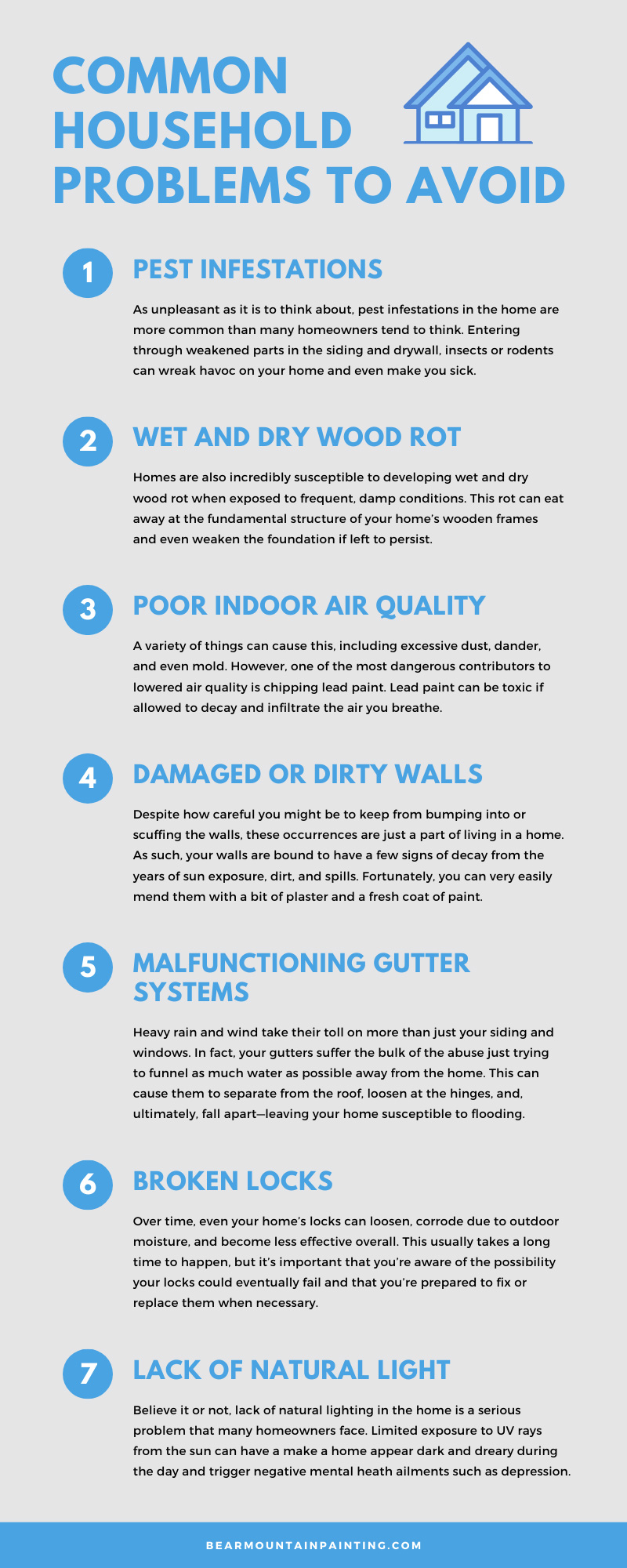
Common Household Problems to Avoid

Common Household Problems to Avoid

Whether you live in an older or newly built home, there’s always a possibility that you’ll have to manage a few repair projects. No matter how new a home is, it can still have its fair share of problems that you must fix in order to maintain your quality of life. Some of these tasks might be small and others a bit more costly, but completing all of them is crucial to preserving the home you’ve worked so hard for. To keep your home in the best possible condition going forward, make sure you’re watching for these common household problems to avoid and taking the steps to correct them.

Pest Infestations

As unpleasant as it is to think about, pest infestations in the home are more common than many homeowners tend to think. Entering through weakened parts in the siding and drywall, insects or rodents can wreak havoc on your home and even make you sick. As such, it’s crucial that you take action as soon as possible to fix the problem (if it already exists) or to keep one from developing. This process often involves calling an exterminator to inspect the property for potential signs of infestation and then taking steps to get rid of any unwelcome visitors. Once you’ve taken care of the initial problem, you can then turn your attention to preventing any future infiltrations by fixing the damage and installing newer, stronger siding. This way, you lessen the chances that a small pest or two will turn into many and cause further destruction.

Wet and Dry Wood Rot

Homes are also incredibly susceptible to developing wet and dry wood rot when exposed to frequent, damp conditions. This rot can eat away at the fundamental structure of your home’s wooden frames and even weaken the foundation if left to persist. Over time, this can make a house increasingly vulnerable to other outdoor elements and, ultimately, lead to its overall collapse. If you notice rot of any kind forming along your wooden frames, it’s essential that you jump on the chance to replace those sections before the rot can spread. When you’re inspecting for rot, make sure to check all areas that you suspect has come into contact with water. This will not only help you find rot, but also narrow down the source of the problem.

Poor Indoor Air Quality

Another common household problem to avoid is the development of poor indoor air quality. A variety of things can cause this, including excessive dust, dander, and even mold. However, one of the most dangerous contributors to lowered air quality is chipping lead paint. Lead paint can be toxic if allowed to decay and infiltrate the air you breathe. This—along with other floating particles—can eventually make you sick and put the overall health of you and your family at risk in the long term. Because of this, it’s crucial that you begin monitoring the air quality in your home and to be on the lookout for contaminants. If you discover them, take the proper steps to get rid of the source. This may be as simple as changing your home’s HVAC filters, or you may require expert services to remove lead or mold.

Damaged or Dirty Walls

Despite how careful you might be to keep from bumping into or scuffing the walls, these occurrences are just a part of living in a home. As such, your walls are bound to have a few signs of decay from the years of sun exposure, dirt, and spills. Fortunately, you can very easily mend them with a bit of plaster and a fresh coat of paint. If you notice any of the standard signs you need an interior paint job, try to complete the project quickly to prevent further damage. Best of all, by using the right paint finish on your walls, you can even protect them from the same problems in the future.

Malfunctioning Gutter Systems

Heavy rain and wind take their toll on more than just your siding and windows. In fact, your gutters suffer the bulk of the abuse just trying to funnel as much water as possible away from the home. This can cause them to separate from the roof, loosen at the hinges, and, ultimately, fall apart—leaving your home susceptible to flooding. Because of this, you should replace your gutters whenever you begin to notice signs that they’re losing their effectiveness. Doing so promptly can save you from costly damage to your yard and to your home’s foundation.

Broken Locks

Over time, even your home’s locks can loosen, corrode due to outdoor moisture, and become less effective overall. This usually takes a long time to happen, but it’s important that you’re aware of the possibility your locks could eventually fail and that you’re prepared to fix or replace them when necessary. Many homeowners choose to switch out their locks—and sometimes even their entire front doors—every few years or so. This ensures not only that your locks are strong, but also that you and your family remain safe for years to come.

Lack of Natural Light

Believe it or not, lack of natural lighting in the home is a serious problem that many homeowners face. Limited exposure to UV rays from the sun can have a make a home appear dark and dreary during the day and trigger negative mental heath ailments such as depression. As this condition worsens, it can even make certain individuals sick from a deficient supply of vitamin D. To let in more light and brighten up your home as well as your mind, consider installing a few more windows. This will allow you to let in as much light as you choose while supplying you with the means to get fresh air in your darkened back rooms.

We at Bear Mountain Custom Painting dedicate ourselves to the entire home repair process, from house painting and gutter replacement to cabinet carpentry in Cumming, GA. This way, we can be there for our clients when they need us the most—no matter what their project entails. If you notice any of these common problems around your home, we can contribute to fixing them and leaving your home looking its best.

Common Household Problems to Avoid
Signs You Need a New Entry Door

Signs You Need a New Entry Door

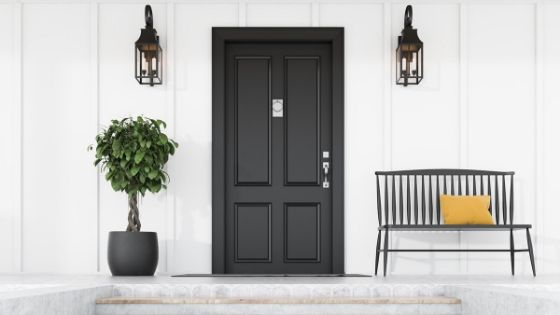
We think of our front doors as strong blockades against the outside world’s dangers. Once we get inside and lock it behind us, our previous worries seem to melt away in the realization that we’re finally home. However, even the strongest of front doors don’t last forever, and it’s up to us as homeowners to notice when their time is up. So, to keep you and your family protected and secure, make sure you’re aware of the signs you need a new entry door.

Visible Damage

No matter how sturdy a door is, it still has the potential to sustain various damages throughout its years of exposure to the elements. This could be in the form of scratches, cracks, and even faded paint, depending on the type of stress it’s regularly exposed to. Additionally, if you live in a damp area, your door could also begin warping as the wooden frame gets weakened by the moisture.

Squeaking or Sticking

Over time, you could also notice that your door begins squeaking when it’s moved or sticking to the frame when you try to open it. Even if you don’t realize it initially, these are signs that the door isn’t sitting right in the frame anymore and that it isn’t properly opening or closing. This means that the door itself has either warped or it’s no longer strong enough to maintain its secure position.

Drafts or an Increasing Energy Bill

Your door might also need to be replaced if you’re experiencing frequent drafts. Drafts begin to form when your door is no longer sitting flush against its frames, allowing excess air from the outside in as a result. This can significantly affect your home’s internal temperature and impact how comfortable you are. Additionally, even if you don’t notice the draft itself, you may find your energy bill rising as your thermostat tries to compensate for the fluctuating climate.

Noticeable Moisture Near the Door

Excessive moisture isn’t good for any part of your home, but it’s especially harmful to your wooden doors. A fluctuation of temperatures can cause condensation to build between the panes of glass in the door as well as in the wood itself. This makes it susceptible to things like wood rot and mold that can weaken the door’s overall structure. So, if you notice moisture building around that area, it could be a sign of other problems to come.

At Bear Mountain Custom Painting, we understand that your home is your castle and you need people who are going to go the extra mile to keep your home secure. It’s for this reason that, along with our painting services, we also offer door repair in Cumming, GA. With these services in our arsenal, we can be your one-stop-shop for keeping your home in beautiful condition.

BLOGBLOGBLOGBLOGBLOGBLOGBLOG